Updated: October 2026
You've probably seen it at plenty of Sydney intersections. Just before the traffic lights an extra lane appears. It continues through the intersection, then ends a short distance past the lights, with painted arrows telling drivers to merge.
Many drivers leave this lane empty and sit in the queue next to it. The few who use it often get dirty looks, as if they're pushing in.
Here's the truth: that lane is there by design. It's meant to be used, and using it properly helps everyone get through the lights faster.
Why the Extra Lane Is There
Traffic engineers call these lanes auxiliary through lanes, or short lanes. Traffic lights are usually the bottleneck on a busy road, because cars can only get through while the light is green.
By adding a lane just before the lights, two lanes of traffic can go through on each green instead of one. The road then gives drivers a stretch of space on the other side to merge back into one lane.
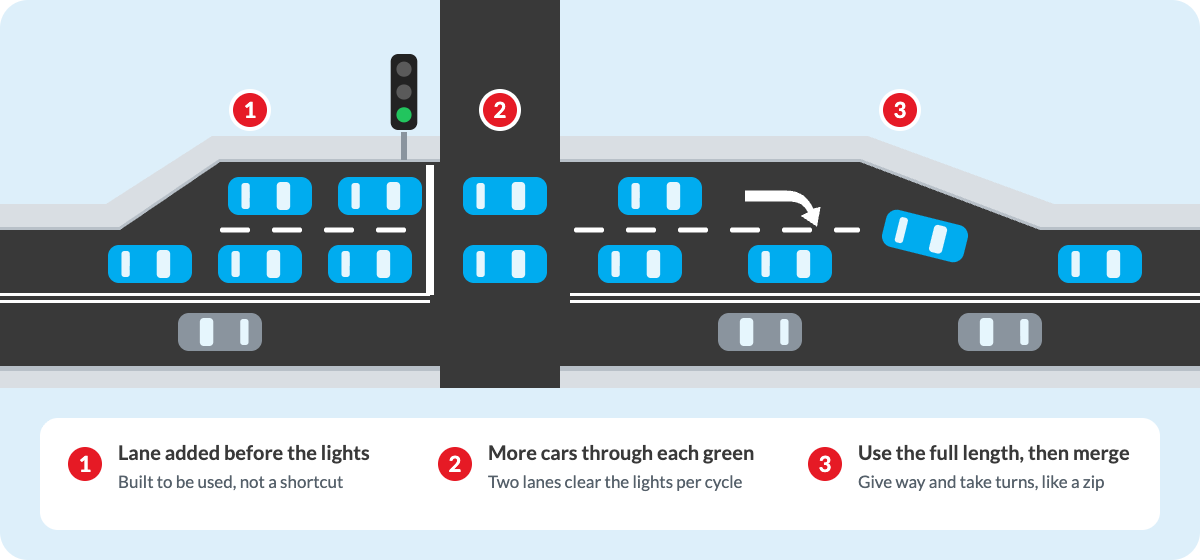
The design only works if people actually use the lane. An Australian study of 57 intersection approaches found that these lanes are often under-used, which means the intersection moves fewer cars than it was built to.
Using the short lane is not "cheating"
The lane is part of the road design. Every car that uses it is one less car in the main queue. When drivers leave it empty, fewer cars get through each green and the queue gets longer for everyone, including the drivers who chose to stay put.
Check the arrows first. Only use the lane to go straight if the road markings and signs allow it. Some short lanes are left-turn-only lanes, marked with turn arrows. They are not through lanes.
Everyone Should Use It: Fill Both Lanes
When you're queuing at the lights and the short lane is going your way, move into it rather than leaving it empty. Indicate and give way to traffic already in that lane, just like any other lane change.
If both lanes are filled evenly, the most cars get through on each green, and the queue behind clears faster.
Use the Full Length and Merge as Late as Is Safe
Once you're through the lights, keep driving with the flow of traffic and use the whole length of the lane. Merge near the end, where the painted arrows and the taper are, not straight after the intersection.
This is called a late merge or zip merge. When both lanes stay full right up to the merge point, the queue is shorter and both lanes move at a similar speed. Drivers then take turns at the end, like the teeth of a zip.
Research backs this up. Minnesota's Department of Transportation found that late merging can cut the length of a queue by up to 50%, with around 40% being common, and that it makes merging safer and reduces road rage because no one feels like they are being pushed in on. (Their research was on roadworks merges, but the same principle applies.)
Don't Stop in the Merge Lane
One of the most common mistakes is driving through the lights and then stopping at the very start of the merge lane to wait for a gap.
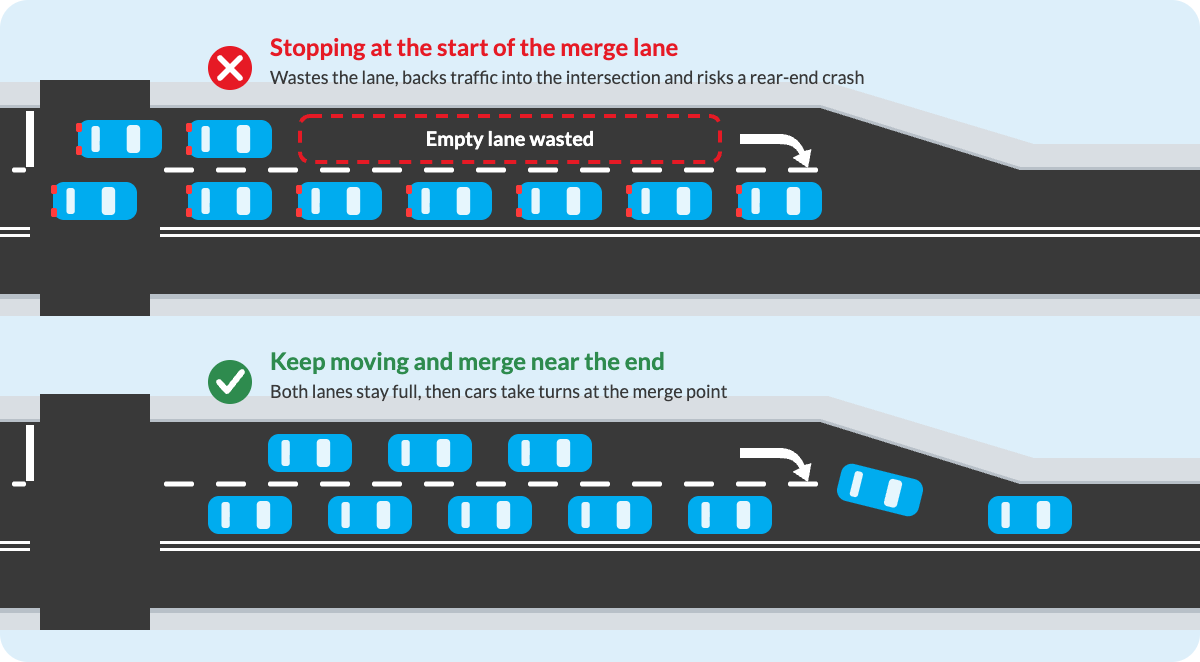
Stopping there causes problems:
- It wastes the lane. The space ahead of you sits empty.
- Cars behind you can get stuck in the intersection when the lights change, blocking cross traffic.
- Drivers behind aren't expecting you to stop, so it raises the risk of a rear-end crash.
- Stopping for no good reason can also be treated as unreasonably obstructing other drivers under Rule 125 of the NSW Road Rules.
Instead, keep moving at a sensible speed, check your mirrors and blind spot, indicate, and look for your gap as you approach the end of the lane. Matching the speed of the traffic beside you makes the merge smooth for everyone.
Who Has to Give Way? (The Legal Part)
Merging late doesn't give you right of way. You still need to merge safely and follow the give-way rules. There are two situations:
1. The lane ends and you move across a lane line. This is the most common layout after traffic lights: a broken lane line, painted merge arrows and often a "lane ends" sign. You're changing lanes, so under Rule 148 you must give way to vehicles already in the lane you're moving into, and you must indicate.
2. Two lines of traffic merge with no lane markings. This is a true zip merge, sometimes signposted "Form One Lane". Under Rule 149 you must give way to the vehicle that is ahead of you, so drivers take turns.
Penalties: failing to give way when changing lanes or merging carries a fine (currently $423) and 3 demerit points. Failing to indicate a lane change carries a fine (currently $235) and 2 demerit points.
If You're in the Lane That Continues
Merging works best when both sides cooperate. If you're in the through lane:
- Leave a reasonable gap so a merging car can slot in.
- Take turns. One car from each lane is fair and keeps traffic moving.
- Don't speed up or close the gap to block someone. It's dangerous and slows everyone down.
- Remember the driver merging is using the road exactly as it was designed.
Quick Checklist
- Check the arrows: is the short lane a through lane?
- If it is, use it. Fill both lanes at the lights.
- After the lights, keep moving and use the full length of the lane.
- Don't stop at the start of the merge lane.
- Mirrors, indicator, head check, then merge near the end into a safe gap.
- Give way and take turns, like a zip.
Learn to Merge With Confidence
Merging and lane changes are some of the most stressful moments for new drivers, and they're also skills driving test assessors watch closely. Our instructors will show you how to read lane markings, pick your gap and merge smoothly in real Sydney traffic. Book a lesson online or call us on 1300 806 506.
Official NSW Government Information
Fine amounts are indexed every year on 1 July. For the current rules and penalties, please refer directly to the official sources:
This information is provided as general guidance only and is not legal advice. Penalty amounts are those in effect at the time of writing and may change. Always follow the signs and road markings at each intersection.